
You cannot prevent every cancer — but there are meaningful ways to lower risk.
Up to 40% of cancer diagnoses in the United States are associated with modifiable factors. While no behavior guarantees prevention, understanding evidence-based actions helps you make informed choices for long-term health.
Start With the Biggest Opportunities
Public health research shows that a few key behaviors account for the largest reduction in population cancer risk.
- Tobacco CessationStopping tobacco use is the single most impactful action to lower risk for 12 types of cancer.Read Quitting Guide
- Limiting AlcoholAlcohol is a known human carcinogen. Reducing intake lowers risk for breast, colorectal, and mouth cancers.Read Alcohol & Risk Guide
- Cancer-Preventing VaccinesHPV and Hepatitis B vaccines directly prevent viral infections that cause cervical, oral, and liver cancers.Read Vaccine Guide
- Sun & UV ProtectionBroad-spectrum sunscreen, sun-protective clothing, and avoiding tanning beds lower melanoma and skin cancer risk.Read Sun Safety Guide
- Physical Activity & WeightRegular movement supports immune function and regulates hormones linked to breast, colon, and endometrial cancers.Read Physical Activity Guide
- Routine Cancer ScreeningScreening tests (such as colonoscopies and Pap tests) find and remove precancerous polyps or tissue before cancer develops.Read Screening Options
Beware of Prevention Myths & Unproven Claims
Be cautious of commercial claims selling "detoxes," "alkaline cleanses," or high-dose supplements promising to "cancer-proof" your body. Major scientific reviews show that high-dose supplement pills do not replace a balanced diet and, in some cases (such as high-dose beta-carotene in smokers), can actually increase cancer risk.
Inherited Risk, Age & Environmental Exposures
Some risk factors — such as aging, inherited gene mutations (like BRCA or Lynch Syndrome), and historical environmental exposures — cannot be altered by lifestyle changes alone. If cancer runs in your family, genetic counseling and tailored high-risk screening schedules provide specialized protection.
Browse All 8 Prevention Categories

Watch: prevention in 60 seconds
Short captioned videos on the biggest evidence-based risk factors and screenings — each links to its full plain-language guide.
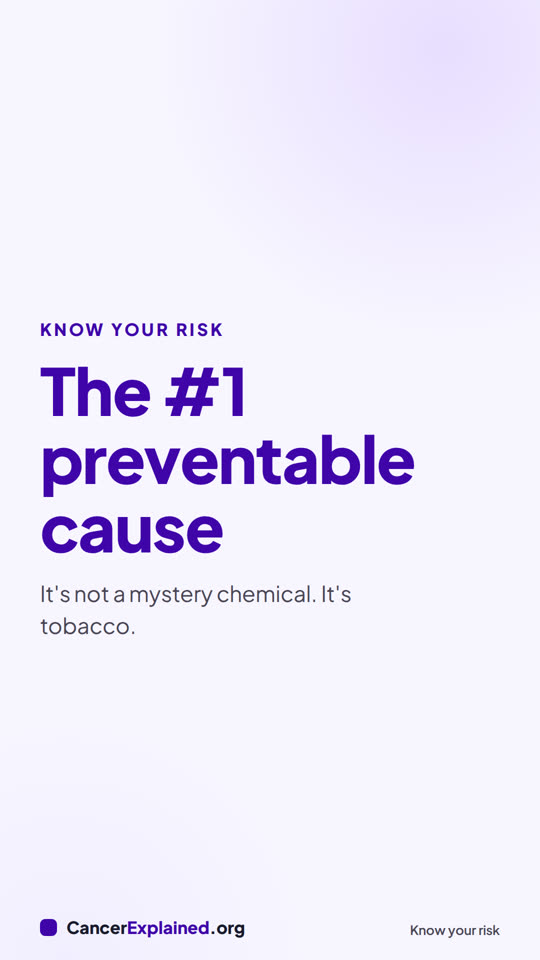 The #1 preventable cause of cancer1 min video · Captioned
 Is it too late to quit smoking?1 min video · Captioned
 The #2 cause of lung cancer is in some homes1 min video · Captioned
 HPV and cancer: what to know1 min video · Captioned
 The other anti-cancer vaccine1 min video · Captioned
 Body weight and cancer risk1 min video · Captioned
 Exercise and cancer risk1 min video · Captioned
 What should I eat to lower cancer risk?1 min video · Captioned
 Tanning beds and skin cancer1 min video · Captioned
 Cancer screening: benefits AND harms1 min video · Captioned
 Colon cancer screening starts at 45 now1 min video · Captioned
 Mammograms: when and how often1 min video · Captioned
A Compassionate Reminder
Developing cancer is never a moral failure or a personal fault. Cancer is a complex cellular disease. Risk reduction is about empowering individuals and communities with knowledge, not assigning blame.
Educational Disclaimer & Medical Safety
CancerExplained.org provides evidence-based health education to help you prepare for discussions with licensed clinicians. This content does not constitute medical advice, diagnosis, or treatment recommendations. Non-cancerous conditions are far more common for most symptoms. Never disregard or delay professional medical advice because of something you read online.